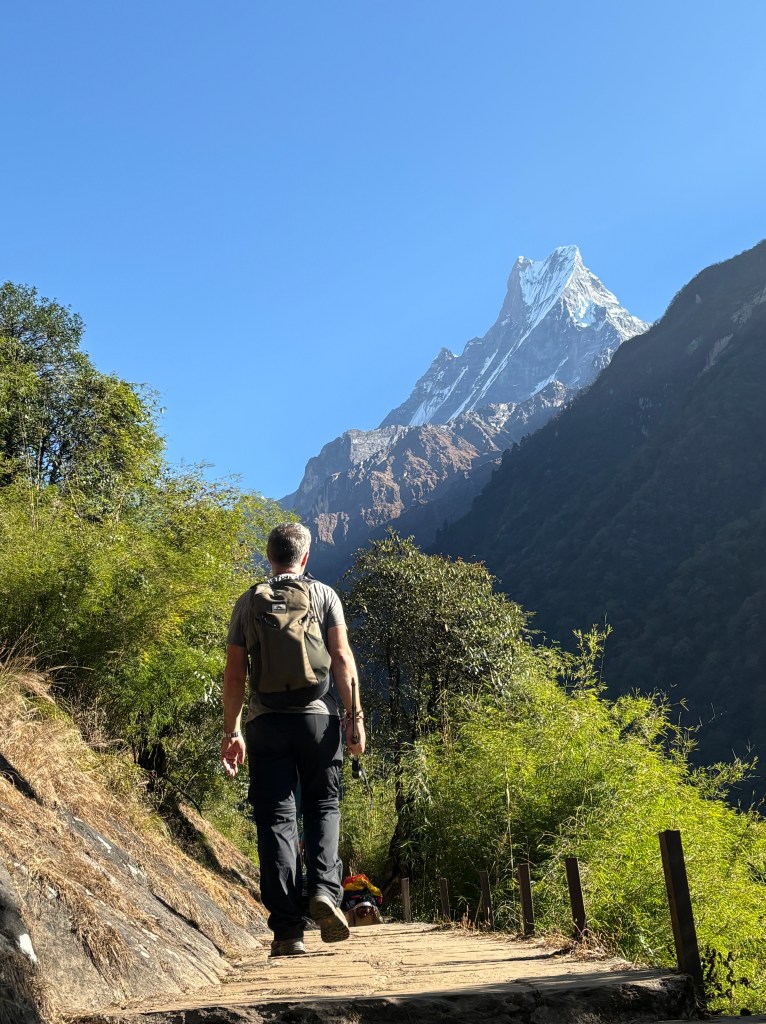
“The single biggest goal in life is to know and accept who you are. But for me at least, the joy of self-discovery is the opposite side of the same coin.”
Stan
Nature and nurture are like siblings – sometimes they are highly compatible and get along well. Other times their personalities clash, and there are times when it’s as if they’ve grown up on completely different sides of the tracks.
We are born with an inherent nature, but it is the environment in which we grow up that initially shapes us. The path we take as a new born baby and through our early childhood, including a good part of our primary school years, is almost exclusively set by those who are closest to us. Our brain establishes cognitive thinking patterns based on what these people say and do, and we don’t make any big cognitive decisions of our own concerning our life. At the end of our first decade our nature is certainly apparent, but nurture has had an outsized influence on our development to this point.
But some time after this nature tries to assert its ascendency over its hitherto dominant sibling. The precise point in time is different for all of us, but for most it gathers steam in our teens, as we start to think independently and test the boundaries of our home, school and community environment.
But teenage-hood, mixed up as it is with social pressures and challenging physiological changes, can distort and contort, to the extent that often it leads us down blind alleys that will not help us to unpeel our true nature.
Over time we will all adjust our life paths as we begin to work out what isn’t working for us or what we want to change. But wherever you are in your life, now is as good a time as any to ask yourself:
‘Do I really know who I am?’
Your instant response might be ‘Yes, of course I do’. But allow the question to sit with yourself for a few days and keep asking yourself the question in different everyday situations and in quiet reflective moments. You can ask complementary questions like: ‘What am I here for?’ or ‘What is my mission in life?’ or ‘What is my purpose?’ If the answer is not obvious to you then it is likely that in order to know who you are, you still need to discover who you are.
If you are struggling with this question, and particularly if it is a question you have been struggling with for a long time, then my advice to you is not to let it become a burden, but instead to look upon it simply as a journey of self-discovery. And most importantly of all, to enjoy that journey.
Self-acceptance, contentment and resilience – why it is important to know who you are
The crux is this: it is only when we know who we are, or have freed ourselves to enjoy the process of self-discovery, that we can accept who we are. Until this time, we will keep on blindly pursuing paths that do not fulfill us. We may tell ourselves that they are ful-filling, but we are ful-fooling ourselves.
Once we know ourselves or are in an unburdened self-discovery mode it is but a short step to accepting who we are. Herein is the grounding of internal contentment. We start to embrace – rather than judge – our own flaws, and we are less inclined to compare our own situation to that of others. We begin to recognize our triggers and learn how to deal with them. We are more happy with our lot, but we also make time for things that genuinely fulfill us. Our inner core becomes stronger, our outer shell authentically confident, and overall we are more resilient to life’s curveballs. We feel more whole. We become more self- and emotionally intelligent.
And here’s the real kicker with my Socially Intelligent Culture hat on. As we become comfortable in our own skin so we begin to look upon our external world in a different light. Our family, community, workplace and the world beyond. We become more aware of how our behaviors and actions impact others; we are motivated to soften their impact. At the same time we grow more tolerant of others and their own human frailties and vulnerabilities. We want others to feel the wholeness that we feel.
There is a lot more to say on this, as there are so many strategies that will help us get to the desired outcome. I will therefore be returning to the subject later.
My Story (in brief)
“Travel far enough, you meet yourself.”
David Mitchell
For me, finding out who I am has been a long journey of self-discovery. (I’m 57.) My parents were both conservative and although I grew up in a loving, caring and stable environment, it was relatively narrow and sheltered. I was blind to a world of much greater opportunity.
My initial path took me down a conventional route and my go-with-the-flow personality caused me to follow it with little consideration of an alternative path. Yet the signs were all there – I didn’t feel whole, lacked self-confidence, was often self-questioning. Maybe that sounds like a typical teenager, but the self-questioning continued into adulthood, even though from a belonging perspective my life was complete when I found and married the girl of my dreams and had two incredible kids.
But with the gestation of time, self acceptance has slowly emerged. This primarily is because my perspective on the question ‘Who am I?’ has changed. Rather than wanting to know the answer to this question I am now revelling in the joy of self-discovery. It’s akin to the saying: ‘It’s not the destination, it’s the journey.’
In this way I have attained self-acceptance by the back door. I have accepted and embraced that knowing myself is not a destination but a lifelong journey. The things that make me tick are grounded in exploration and discovery. I know who I am because who I am is someone who enjoys discovery, whether that is exploring new experiences, places and sensations, finding deep personal and emotional connections, unearthing wonders of nature, or discovering new music through creation or listening. Above all I love quality time with my family, especially when we are exploring and discovering together.